
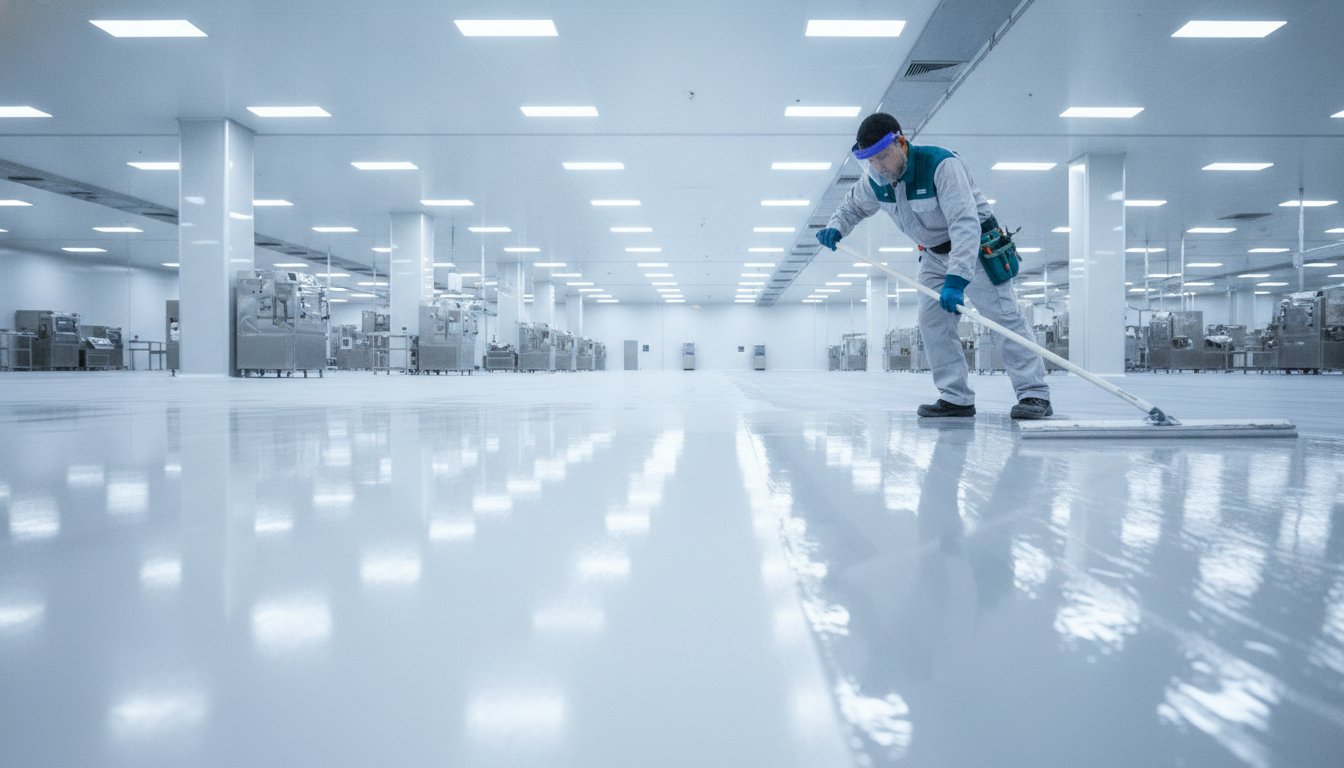
A single hairline crack in your facility’s floor isn’t just an aesthetic flaw. It’s a structural liability that can compromise your entire HACCP certification and invite bacterial growth. You likely recognize that in high-stakes environments like food processing or chemical manufacturing, the floor is a critical piece of industrial equipment. When surfaces fail due to thermal shock or aggressive erosion, the resulting operational downtime and maintenance costs quickly erode your bottom line.
Choosing heavy duty PU flooring Malaysia provides a technical solution designed to withstand these exact pressures for a decade or more. You’ll discover why polyurethane systems are the gold standard for meeting the rigorous MS 1514:2022 and MS 1480:2019 standards required in modern Malaysian industry. This guide details the specific performance metrics of PU mortar and self-levelling systems, compares their resilience against standard epoxy, and provides a roadmap for achieving long-term infrastructure stability with minimal operational disruption.
Key Takeaways
- Identify why hybrid PU cementitious screeds provide superior durability compared to standard resin coatings in demanding industrial environments.
- Learn how to specify heavy duty PU flooring Malaysia to withstand extreme thermal shock and high humidity without structural failure.
- Determine the exact system thickness required to maintain strict compliance with MS 1514:2022 GMP and MS 1480:2019 HACCP food safety standards.
- Distinguish between the aesthetic advantages of PU Self Levelling and the high-impact resilience of PU Heavy Duty systems for better resource allocation.
- Understand the critical role of professional substrate preparation in achieving a high-performance floor that lasts over a decade under heavy machinery load.
Understanding Heavy Duty PU Flooring for Industrial Environments
Heavy-duty polyurethane (PU) flooring is a specialized resin-based system engineered to provide extreme durability in the most demanding industrial settings. Unlike standard coatings, these systems typically integrate polyurethane resins with cementitious fillers and graded aggregates to create a robust hybrid screed. This dense matrix allows the floor to absorb mechanical stress and intense thermal fluctuations that would typically cause rigid materials to fail. PU flooring is a high-performance solution that outlasts epoxy in high-impact zones.
For facility managers considering heavy duty PU flooring Malaysia, it’s vital to distinguish between specific application methods based on operational needs. PU Self Levelling systems are designed to provide a smooth, seamless finish that prioritizes hygiene and ease of maintenance in lighter traffic areas. In contrast, PU Heavy Duty systems are applied at greater thicknesses to provide maximum impact resistance and load-bearing capacity for heavy machinery and constant forklift traffic. Each system serves a distinct purpose in maintaining the structural integrity of a facility.
The Chemistry of Resilience: PU vs. Epoxy
The fundamental advantage of polyurethane lies in its molecular structure. While epoxy is rigid and prone to brittle cracking under localized stress, the principles of polyurethane polymer science highlight the material’s inherent elasticity. This flexibility allows the flooring to move with the concrete substrate during temperature shifts without delaminating. Additionally, PU systems exhibit superior tolerance for moisture. They are particularly effective in facilities with high moisture vapor transmission, a common challenge in Malaysia’s humid climate, as they allow the substrate to breathe slightly while maintaining a powerful chemical bond.
Key Performance Indicators for Industrial Floors
Specifying a floor requires looking at concrete data points that define its expected operational lifespan. High-quality heavy duty PU flooring Malaysia must meet specific benchmarks to ensure long-term performance:
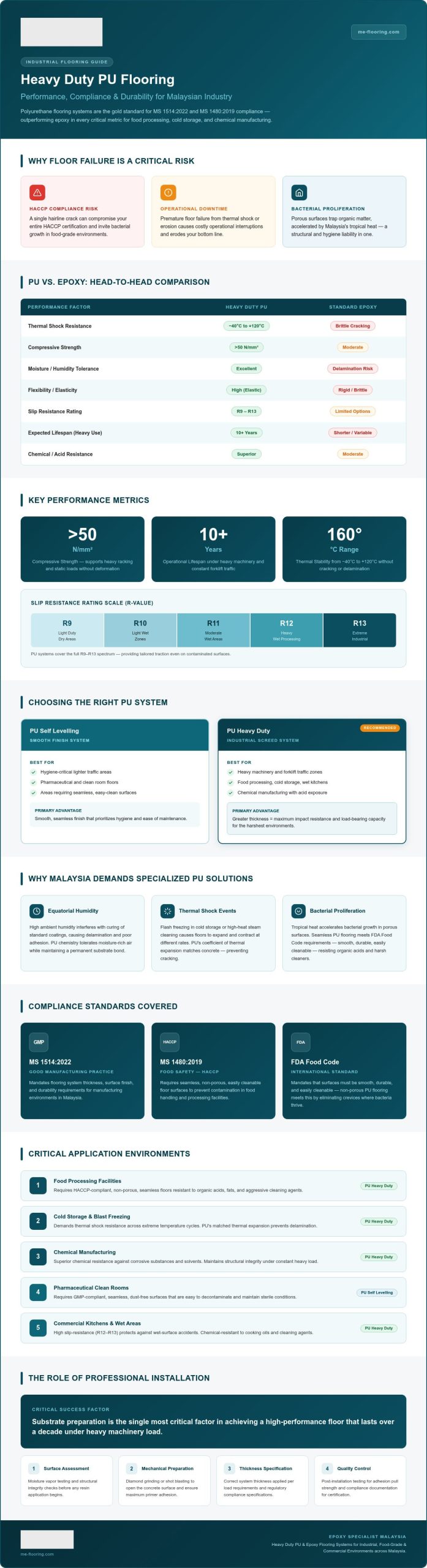
- Compressive Strength: Industrial PU systems often reach compressive strengths exceeding 50 N/mm², which is essential for supporting heavy racking and static loads without deformation.
- Abrasion Resistance: Using Taber abrasion testing, these floors demonstrate minimal mass loss, ensuring the surface doesn’t dust or wear down under high-speed traffic.
- Slip Resistance: Safety is paramount in wet processing areas. Systems are rated from R9 to R13, providing tailored traction levels to prevent workplace accidents even when the surface is contaminated.
Why Malaysian Industries Require Specialized PU Solutions
Malaysia’s equatorial climate creates a high-stakes environment for resin flooring. High ambient humidity often interferes with the curing process of standard coatings, leading to delamination or poor inter-coat adhesion. For facilities in this region, specifying heavy duty PU flooring Malaysia isn’t just a preference; it’s a technical necessity to ensure the bond between the resin and the concrete substrate remains permanent despite the moisture-rich air. Without this specialized chemistry, floors are prone to premature failure, leading to costly operational interruptions.
Combating Thermal Shock in Cold Storage and Kitchens
Standard flooring materials are often too rigid to handle sudden temperature swings. In food processing or cold storage, surfaces face flash freezing or high-heat steam cleaning. These events cause “thermal shock,” where the floor and substrate expand or contract at different rates. PU Heavy Duty systems are engineered with a coefficient of thermal expansion similar to concrete. This allows the floor to move in unison with the slab, preventing the brittle cracking often seen in epoxy. These systems remain stable across an extreme range of -40°C to 120°C, ensuring structural integrity in the most demanding thermal environments.
Industrial environments in the tropics must also combat rapid bacterial proliferation. Porous surfaces trap organic matter, which thrives in Malaysia’s heat. Utilizing non-porous, seamless heavy duty PU flooring Malaysia ensures compliance with international FDA Food Code requirements, which mandate that surfaces be smooth, durable, and easily cleanable. These floors also resist aggressive local cleaning agents and organic acids that would otherwise erode inferior coatings, maintaining a hygienic environment that meets both local and global standards.
Moisture Tolerance and the Malaysian Climate
Many Malaysian factories are built on ground-floor slabs without effective damp-proof membranes. This leads to high moisture vapor transmission, which often causes osmotic blistering in non-breathable floors. Breathable PU cementitious systems allow this vapor to pass through without building pressure that ruptures the surface. Before any application, it’s critical to perform moisture testing using standards like ASTM F2659 to ensure the substrate is ready. If you’re unsure about your facility’s current slab condition, it’s wise to consult a specialist for a detailed site technical assessment to determine the most resilient solution for your infrastructure.
Critical Application Areas for Heavy Duty PU Flooring
Industrial facilities across Malaysia operate under rigorous regulatory frameworks and demanding physical conditions. The selection of a flooring system must align with the specific hazards of the environment, whether those involve biological contaminants or mechanical stress. Implementing heavy duty PU flooring Malaysia ensures that infrastructure meets both local and international safety benchmarks while providing a surface that resists degradation from specialized industrial processes.
In the electronics and semiconductor sectors, flooring must do more than support weight. These environments require the integration of anti-static (ESD) properties to protect sensitive components from electrostatic discharge. Similarly, pharmaceutical and healthcare facilities rely on PU systems for GMP compliance. The high chemical resistance of these floors allows laboratories to handle reagents and aggressive disinfectants without risking surface erosion or sub-floor contamination.
Food Processing and HACCP Compliance
Hygiene is the primary driver for flooring specifications in the food and beverage industry. To maintain MS 1480:2019 HACCP standards, surfaces must be completely seamless to eliminate points where organic matter can accumulate. High-performance PU systems often incorporate anti-microbial additives that actively inhibit the growth of bacteria and fungi throughout the thickness of the material.
A critical component of these installations is the use of seamless coving. By creating a curved transition between the floor and the wall, installers eliminate 90-degree corners that are notoriously difficult to sanitize. This design aligns with USDA sanitation standards, which emphasize that floors must be easily cleanable and durable enough to withstand constant heavy-duty washdowns. The dense, non-porous nature of the resin ensures that even under high-pressure cleaning, the floor remains impermeable to fats, oils, and blood.
Chemical Plants and Automotive Manufacturing
The mechanical demands of heavy manufacturing require a floor with exceptional load-bearing capacity. In automotive assembly lines, the surface must support the static weight of heavy machinery and the dynamic load of constant forklift traffic. heavy duty PU flooring Malaysia provides the necessary impact resistance to survive dropped tools and heavy metal parts that would shatter thinner, more brittle coatings.
Chemical processing plants present a different set of challenges. These facilities often deal with localized spills of hydraulic fluids, battery acids, and various industrial solvents. PU systems are engineered to resist a wide spectrum of chemicals, preventing the liquid from penetrating the concrete and causing structural damage. This resilience is vital for maintaining long-term operational safety and avoiding the high costs associated with frequent floor repairs in high-traffic production zones.
Specifying the Right PU System: Thickness and Load
Specifying the correct thickness is the most influential decision in the procurement process. For heavy duty PU flooring Malaysia, the choice isn’t merely about cost, but about matching the system’s physical properties to the operational reality of the facility. While PU Self Levelling systems offer a smooth, aesthetically pleasing finish suitable for light-to-medium traffic, PU Heavy Duty systems utilize a cementitious screed to provide the structural mass required for intense industrial utility. Selecting the wrong depth often leads to premature surface failure under mechanical stress. Before finalizing your specification, reviewing a detailed breakdown of heavy duty PU flooring price Malaysia factors can help you align system performance with your budget and avoid costly under-specification.
The Thickness Guide for Industrial Specification
Industrial PU systems are categorized by their applied depth, which directly correlates to their resistance levels. The following benchmarks serve as a framework for specification:
- 3mm to 4mm: These systems are ideal for pedestrian zones, light-duty cleanrooms, and areas with minimal chemical exposure. They provide a hygienic seal without the bulk of a full screed.
- 6mm: This is the industry standard for heavy traffic environments. It provides the necessary resilience for constant forklift movement and offers moderate thermal shock resistance.
- 9mm and above: Reserved for extreme conditions. This thickness is mandatory for areas requiring frequent steam cleaning or where heavy load-bearing machinery operates.
Surface finish selection must also align with safety protocols. A gloss finish provides high light reflectivity and ease of cleaning, whereas a matt or textured finish is often required to achieve specific R-ratings for slip resistance in wet processing zones. The texture profile should be determined by the type of contaminants present, such as oils or water, to ensure worker safety remains compromised.
Surface Preparation: The Foundation of Longevity
Technical mastery in application is irrelevant if the substrate is poorly prepared. Industry data indicates that 80% of industrial floor failures stem from inadequate surface preparation. To ensure heavy duty PU flooring Malaysia achieves its intended decade-long lifespan, mechanical grinding or shot blasting is a non-negotiable requirement. These methods remove laitance and surface contaminants to reveal a sound, open-pored concrete surface.
Achieving the correct International Concrete Repair Institute (ICRI) Concrete Surface Profile (CSP) is essential for a permanent mechanical bond. For thick PU screeds, a CSP of 3 to 5 is typically required. Installers must also identify and repair substrate cracks using specialized resin fillers before the main system is applied. Neglecting these foundational steps leads to delamination and air bubbling. For a professional assessment of your facility’s substrate readiness, contact the technical specialists at ME Flooring to ensure your infrastructure investment is protected.
Professional PU Flooring Installation with ME Flooring
ME Flooring Sdn Bhd stands as a national specialist in the execution of high-stakes industrial infrastructure. With a track record of over 360 completed industrial projects across various sectors, the company has established itself as a safe pair of hands for complex flooring requirements. The approach to heavy duty PU flooring Malaysia is rooted in technical mastery and methodical precision, ensuring that every installation meets the rigorous operational demands of the pharmaceutical, electronics, and food and beverage industries. This expertise allows for the seamless integration of high-performance materials that align with Malaysian environmental conditions and regulatory standards.
The technical consultation process is designed to eliminate the risks associated with inferior applications. It begins with a comprehensive site audit and follows a structured progression through to the final handover. By prioritizing functionality and longevity over aesthetic shortcuts, the focus remains on providing a surface that maintains its structural integrity under the most punishing industrial stressors. Every project is handled by a disciplined team that understands the importance of minimizing operational disruption while achieving a durable, compliant finish.
The ME Flooring Project Methodology
The methodology employed by ME Flooring is thorough and results-driven. It starts with critical moisture testing protocols, utilizing the ASTM F2659 standard to assess the concrete substrate’s readiness. This step is essential in the Malaysian climate to prevent future osmotic blistering or delamination. Following the audit, technicians develop a customized system design that specifies whether PU Heavy Duty or PU Self Levelling is most appropriate for the facility’s specific load and thermal profiles. Trained specialists then execute the application with precision, ensuring that every layer adheres to the strict parameters required for full warranty compliance and long-term performance.
Long-Term Value and Maintenance Support
Investing in a professional installation provides significant lifecycle cost benefits compared to frequent repairs of inferior coatings. While the initial capital expenditure for heavy duty PU flooring Malaysia reflects its technical complexity, the extended service life of 10 or more years ensures a superior return on investment. To maintain this performance, facilities should adopt a structured maintenance regime. This includes using non-abrasive cleaning tools and pH-neutral detergents that preserve the resin’s chemical resistance. Regular inspections of high-impact zones and joints are also recommended to identify potential issues before they compromise the floor’s hygienic seal.
For organizations planning their next national infrastructure project, securing a reliable flooring partner is a critical step in ensuring facility compliance and safety. ME Flooring provides the methodical expertise required to solve the most difficult industrial flooring challenges. You are invited to consult with a specialist to design a durable solution that meets MS 1514:2022 and MS 1480:2019 standards, providing a stable foundation for your long-term operational success.
Securing Your Industrial Infrastructure for the Next Decade
Choosing the right industrial surface is a strategic decision that impacts your facility’s operational efficiency and regulatory compliance. You’ve learned that managing thermal shock and chemical erosion requires more than just a thick coating; it demands a precision-engineered system that moves in unison with your concrete substrate. Implementing heavy duty PU flooring Malaysia ensures your environment remains hygienic and structurally sound under the most punishing mechanical loads. This technical approach prevents the brittle cracking and delamination that often plague inferior installations.
ME Flooring Sdn Bhd brings the methodical expertise of over 360 completed industrial projects nationwide to your facility. As specialists in HACCP and GMP compliant systems, we provide a safe pair of hands for high-stakes infrastructure requirements. Our proven expertise in heavy-load bearing flooring solutions ensures that your investment provides long-term value and stability. You can achieve a high-performance surface that meets international standards while significantly reducing your maintenance overhead. Consult ME Flooring for Your Heavy Duty PU Project today to build a resilient foundation for your future operations. Your facility deserves a floor that performs as reliably as your most critical machinery.
Frequently Asked Questions
What is the difference between PU and epoxy flooring for industrial use?
Polyurethane systems offer superior elasticity and thermal resistance compared to rigid epoxy coatings. While epoxy is suitable for dry warehouses with light traffic, polyurethane is engineered for environments experiencing frequent temperature fluctuations or chemical exposure. Its flexible nature prevents brittle cracking when the concrete substrate expands or contracts. This makes it the preferred choice for food processing and heavy manufacturing where durability under stress is a primary requirement for long-term infrastructure stability.
How long does a heavy-duty PU floor installation take in Malaysia?
A standard installation typically requires four to seven days depending on the facility size and substrate condition. The process involves mechanical surface preparation, primer application, the main screed layer, and a topcoat. While the floor is often tack-free within 24 hours, full chemical and mechanical curing takes approximately seven days for heavy traffic use. Factors like high humidity can influence curing times, necessitating precise environmental monitoring by trained technicians during the application phase.
Is PU flooring suitable for cold storage facilities with sub-zero temperatures?
Polyurethane cementitious systems are specifically designed for cold storage and flash-freezing environments. These floors maintain their structural integrity at temperatures as low as -40°C. Unlike other resins that become brittle and delaminate in sub-zero conditions, heavy duty PU flooring Malaysia expands and contracts at a rate similar to the concrete slab. This thermal compatibility prevents the bond failure and cracking typically caused by extreme cold or rapid temperature shifts during industrial cleaning processes.
Can PU flooring be applied over existing tiles or old concrete?
Application over old concrete is standard, provided the substrate is mechanically prepared to remove contaminants and achieve the required profile. However, applying over existing tiles is generally discouraged in industrial settings. Tiles often hide hollow spots or moisture issues that compromise the resin bond. For a reliable result, tiles are typically removed to expose the base concrete, followed by shot blasting or grinding to ensure a permanent mechanical interlock with the new system.
How do I maintain a PU heavy-duty floor to ensure it lasts 10 years?
Longevity is achieved through a disciplined cleaning regime using pH-neutral detergents and non-abrasive equipment. Avoid high-pressure steam cleaning on systems thinner than 9mm to prevent localized thermal stress. Regular removal of grit and industrial debris prevents surface abrasion. Promptly addressing localized mechanical damage or chemical spills also preserves the floor’s integrity. Implementing a structured maintenance schedule ensures the high-performance properties of the resin remain effective for a decade or more of industrial service.
What are the safety certifications for PU flooring in food factories?
Flooring in Malaysian food facilities must align with MS 1514:2022 Good Manufacturing Practice (GMP) and MS 1480:2019 HACCP standards. These certifications require surfaces to be seamless, non-porous, and easily cleanable to prevent bacterial proliferation. Professional systems often carry SIRIM certification, confirming they meet national quality and safety benchmarks. Utilizing a certified system ensures your facility passes rigorous health audits and maintains a safe environment for food production, processing, and storage.
Why is surface preparation so critical for polyurethane systems?
Surface preparation is the most critical phase because it determines the strength of the mechanical bond between the resin and concrete. Without proper grinding or shot blasting to achieve the correct International Concrete Repair Institute (ICRI) profile, the system will likely delaminate. Proper preparation removes the weak surface laitance and opens the concrete pores. This allows the polyurethane to penetrate the substrate, creating a unified structure capable of withstanding heavy machinery and constant forklift traffic.
What is the typical lifespan of a 6mm PU heavy-duty floor under high traffic?
A professionally installed 6mm heavy duty PU flooring Malaysia typically lasts between 10 and 15 years in high-traffic industrial zones. This lifespan assumes the substrate was correctly prepared and a regular maintenance program is followed. While surface aesthetics may dull over time due to mechanical wear, the structural integrity and chemical resistance of the system remain intact. Choosing the correct thickness for your specific traffic load is essential for maximizing this operational lifecycle.



One comment
Pingback:
ESD Flooring for Electronics: Static Control Guide – ME Flooring Sdn Bhd