
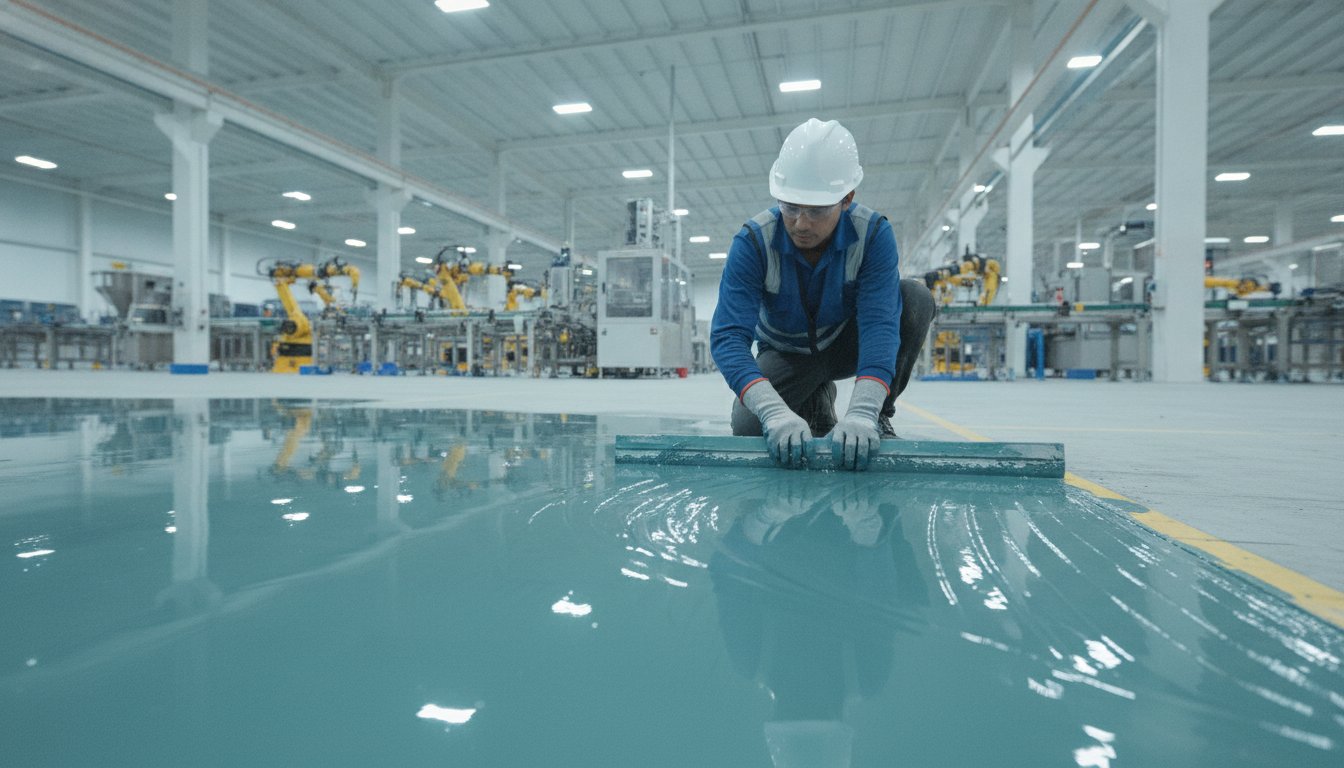
The lowest quote for an industrial floor is often the most expensive mistake a facility manager can make. It’s a common frustration to receive high-value quotes that lack a transparent technical breakdown, leaving you to wonder why costs vary so significantly between contractors. You’re likely looking for a solution that avoids the frequent delamination seen in high-moisture environments while trying to distinguish between standard PU self-levelling and heavy duty PU mortar systems.
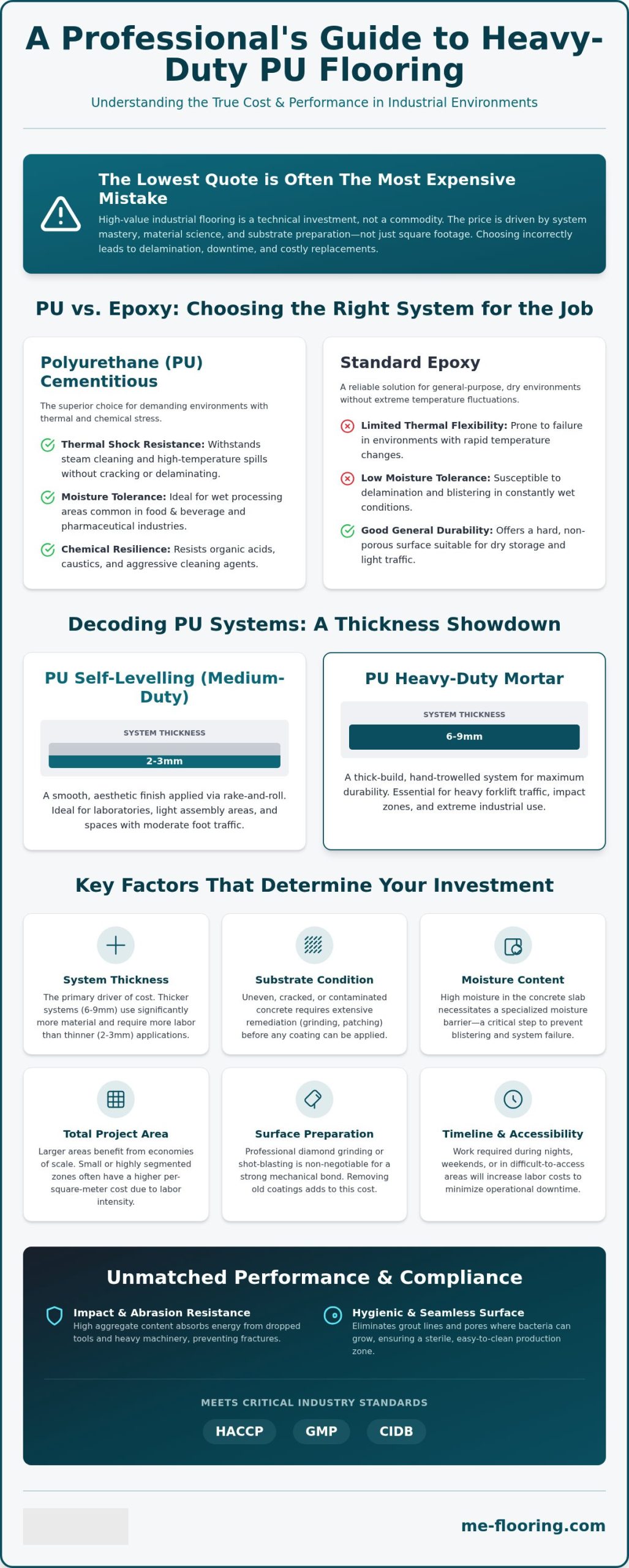
Understanding the heavy duty PU flooring price Malaysia requires a focus on technical mastery rather than just square footage. You’ll discover the specific technical factors, system specifications, and installation variables that determine the professional cost of polyurethane flooring for industrial facilities. This guide provides a clear look at how substrate preparation and system thickness drive performance and longevity. We’ll examine the critical differences between various PU systems to ensure your facility meets HACCP and CIDB standards while securing a dependable, long-term investment.
Key Takeaways
- Polyurethane flooring offers superior thermal and chemical resistance for high-stakes industrial environments where epoxy systems may fail.
- The heavy duty PU flooring price Malaysia is primarily influenced by system thickness and substrate condition rather than simple square footage.
- Choosing between PU self-levelling and heavy-duty PU mortar systems is essential for matching floor performance to specific load-bearing requirements.
- Professional technical site assessments and moisture testing are critical prerequisites to prevent delamination and ensure long-term operational stability.
- Adherence to HACCP and GMP standards remains a mandatory requirement for food processing and pharmaceutical facilities seeking compliant flooring.
Understanding Heavy Duty PU Flooring in the Malaysian Industrial Context
Heavy-duty Polyurethane (PU) flooring is a high-performance cementitious resin system engineered specifically for extreme industrial environments. Unlike standard thin-film coatings, this system combines polyurethane resin with cement and specially graded aggregates. This hybrid chemistry results in a dense, non-porous surface that manages the rigorous demands of daily industrial operations. In Malaysia, these systems are the baseline for facilities requiring adherence to Hazard Analysis and Critical Control Points (HACCP) and Good Manufacturing Practice (GMP) standards.
Malaysian industrial operators often select PU over epoxy systems when their facilities involve high-temperature processes or constant moisture. While epoxy is a reliable choice for dry storage, it often lacks the thermal flexibility needed for wet environments. Sectors such as Food & Beverage, chemical processing, and pharmaceutical manufacturing depend on PU to maintain a sterile and durable surface. Identifying the specific operational needs of these sectors is the first step in calculating the heavy duty PU flooring price Malaysia, as the environmental challenges directly dictate the necessary system thickness.
PU Self-Levelling vs. PU Heavy Duty Mortar
It’s essential to distinguish between PU self-levelling and PU heavy-duty mortar systems, as they serve different functional roles. PU self-levelling is a medium-duty solution typically applied at 2mm to 3mm thickness using a rake-and-roll method. It provides a smooth, aesthetic finish ideal for laboratories or light assembly areas. Conversely, PU Heavy Duty mortar is a thick-build system, ranging from 6mm to 9mm, that requires precise hand-trowelling. This increased material volume and the technical expertise required for application are primary drivers of the heavy duty PU flooring price Malaysia. The mortar variant is indispensable for zones where heavy forklift traffic and mechanical impacts are daily occurrences.
Technical Advantages Driving Market Demand
The demand for heavy-duty PU in Malaysia is driven by its exceptional thermal shock resistance. Facilities that utilize steam cleaning or high-pressure hot water require a flooring system that expands and contracts at a rate similar to the underlying concrete. Without this capability, floors quickly delaminate or crack. Beyond thermal stability, these systems provide several industrial advantages:
- Impact Resistance: The high aggregate content allows the floor to absorb energy from dropped tools or heavy machinery movement without fracturing.
- Chemical Resilience: It resists degradation from organic acids prevalent in food production and aggressive detergents used in pharmaceutical sanitation.
- Hygienic Integrity: The seamless nature of the application eliminates grout lines where bacteria can proliferate, ensuring a fully compliant production zone.
Key Factors Influencing Heavy Duty PU Flooring Price in Malaysia
Determining the heavy duty PU flooring price Malaysia involves more than a simple calculation of square footage. Several variables dictate the final investment, starting with the total project area. Large-scale industrial facilities often benefit from economies of scale, as fixed costs like machinery mobilization and site setup are distributed over a wider surface. Conversely, smaller zones or highly segmented rooms often carry a higher per-square-metre rate due to increased labor intensity and material waste.
Substrate condition remains a primary cost driver. If the existing concrete is uneven or contains structural cracks, significant remediation is required before the resin application. In Malaysia’s tropical climate, high moisture content in the slab is a frequent challenge that necessitates specialized moisture barriers. These barriers prevent osmotic blistering and ensure the system adheres to the USDA flooring standards for seamless, impervious surfaces. Site accessibility and the project timeline also influence the quote. If a facility requires installation during night shifts or weekends to avoid production downtime, labor costs will increase accordingly.
Surface Preparation Requirements
Mechanical bonding is the foundation of any successful installation. Professional contractors utilize diamond grinding or shot-blasting to open the concrete pores, ensuring the PU resin can penetrate the surface effectively. If the site has existing epoxy coatings or ceramic tiles, the removal process adds complexity and cost to the initial quote. Substrate profiling is the process of creating a specific surface texture to maximize the mechanical interlock between the concrete and the floor system, directly determining the coating’s long-term resistance to delamination.
System Thickness and Material Consumption
Material volume is the most transparent factor in the heavy duty PU flooring price Malaysia. There’s a direct correlation between the specified millimetre (mm) thickness and the project’s total cost. Standard industrial specifications typically fall into three categories:
- 3mm Systems: Suitable for light industrial traffic and areas requiring high hygiene without extreme thermal stress.
- 6mm Systems: The industry standard for general manufacturing, providing a balance of impact resistance and durability.
- 9mm Systems: Reserved for heavy-load zones and facilities subjected to extreme thermal shock, such as blast freezers or steam-cleaning bays.
Choosing the correct thickness is a technical decision based on your facility’s mechanical load and thermal exposure profile. To ensure your specification matches your operational reality, a professional site assessment is the most reliable way to avoid over-specification or system failure.
Comparing PU System Specifications and Cost Tiers
The heavy duty PU flooring price Malaysia is segmented into performance tiers that align with specific operational intensities. Unlike generic coatings, these systems are engineered to meet varying heavy-duty flooring requirements, ensuring the material volume matches the facility’s lifecycle expectations. When evaluating the heavy duty PU flooring price Malaysia, facility managers must weigh the upfront investment against the expected mechanical stress and thermal environment of their specific site.
- Tier 1: Light to Medium Duty (2mm-3mm): A self-levelling resin system designed for pedestrian traffic and light trolleys.
- Tier 2: Heavy Duty (4mm-6mm): A robust PU mortar system capable of handling constant forklift traffic and moderate chemical exposure.
- Tier 3: Extreme Heavy Duty (9mm): The highest specification, offering maximum resistance to thermal shock, heavy impact, and aggressive chemical cleaning.
Specialized finishes further refine these cost tiers. Anti-slip textures are critical for wet processing zones to prevent workplace accidents, though they require more precise application techniques. Smooth, hygienic surfaces are reserved for dry, sterile environments where ease of cleaning is the priority. Each finish choice affects the labor hours required, influencing the final project quote.
Standard PU Self-Levelling Performance
PU self-levelling systems are the technical choice for electronics assembly plants and commercial warehouses requiring a seamless, dustproof finish. This tier provides an aesthetically uniform surface that resists light chemical spills and prevents concrete dusting. While it’s a cost-effective entry point for industrial-grade flooring, it has limitations. It isn’t suitable for zones with high moisture ingress or extreme temperature fluctuations. Using this system in a steam-cleaned environment often leads to rapid failure, as the thin profile cannot manage significant thermal expansion.
Heavy Duty Polyurethane Mortar (HD) Benefits
Heavy-duty polyurethane mortar systems provide maximum durability for 24/7 production environments. These systems are specifically formulated to withstand heavy point loads from racking systems and constant machinery vibration. By investing in a thicker mortar system, facility managers secure long-term maintenance savings. Thinner systems often require frequent patching or full replacement within a few years under heavy use. A professionally installed 6mm or 9mm mortar system can remain operational for over a decade, significantly reducing production downtime caused by floor failure.
The Hidden Costs of Poor Installation and Substandard Materials
Accepting a “cheap” quote is often the primary catalyst for catastrophic floor failure in industrial settings. While a lower heavy duty PU flooring price Malaysia might seem attractive during the procurement phase, it frequently indicates a compromise on material quality or surface preparation. When a system fails, the financial burden of production downtime during emergency repairs far exceeds the initial installation fee. Facility managers often find that the cost of halting a 24/7 production line for just 48 hours is significantly higher than the premium paid for a professional-grade installation.
Delamination remains the most common consequence of substandard work. This occurs when the resin fails to achieve a permanent bond with the concrete substrate, usually due to insufficient mechanical profiling or the use of low-grade resins. In the Food & Beverage and pharmaceutical sectors, even minor fissures represent a severe hygiene risk. These cracks become breeding grounds for bacteria and pathogens, directly jeopardizing GMP and HACCP compliance. Using certified industrial-grade resins ensures the surface remains impervious to organic acids and aggressive detergents, maintaining a sterile environment for years.
Moisture-Related Failures in Malaysia
Malaysia’s tropical climate presents unique challenges, specifically regarding rising dampness and high slab moisture. Without the correct application of a Damp Proof Membrane (DPM), moisture vapor pressure builds up beneath the polyurethane layer. This pressure leads to osmotic blistering, where small bubbles of fluid form under the floor surface and eventually rupture. Identifying these early signs is critical because once osmotic blistering begins, the structural integrity of the entire floor system is compromised, necessitating a full and costly strip-back to the bare concrete.
Professional Warranty and Technical Support
A reputable contractor provides a clear guarantee that covers both material defects and application errors, offering security for high-stakes infrastructure. Beyond the initial installation, the value of post-installation support and specific maintenance advice cannot be overstated. A professionally installed system with a 10-year lifecycle offers far greater financial stability than a 5-year system that requires frequent patching and eventual premature replacement. To protect your facility from these hidden liabilities, contact ME Flooring for a comprehensive technical site assessment to ensure your project is specified correctly from the start.
Professional PU Flooring Solutions by ME Flooring Sdn Bhd
ME Flooring Sdn Bhd operates with a disciplined focus on industrial resilience and technical precision. With a proven track record of over 360 completed industrial projects, we understand that a successful installation begins long before the first layer of resin is poured. Our methodology prioritizes industrial authority over generic application. This ensures that the heavy duty PU flooring price Malaysia reflects a solution engineered for your facility’s specific operational stresses, chemical exposure, and load requirements. We don’t just apply coatings; we deliver high-stakes infrastructure security through methodical expertise.
Our project management team excels in minimizing operational disruption for active facilities. We recognize that production downtime is a critical financial variable for Malaysian manufacturers. By utilizing a structured, results-driven approach, we coordinate logistics and application phases to ensure the fastest possible return to service. This seasoned specialization allows us to handle the rigorous demands of pharmaceutical, food processing, and chemical environments where performance is non-negotiable.
Comprehensive Industrial Floor Assessment
Every project initiates with a rigorous substrate analysis to identify potential failure points before they occur. We conduct comprehensive moisture testing to mitigate the risks of osmotic blistering and delamination, which are frequent challenges in the Malaysian climate. Our consultative approach ensures that the selected mm thickness aligns with both your mechanical load profile and your long-term maintenance budget. For facilities requiring the highest levels of hygiene and chemical resilience, our pharmaceutical grade flooring solutions provide the necessary GMP and HACCP compliance. This assessment phase is a prerequisite for providing a transparent quotation that avoids the liabilities of under-specification.
National Service Coverage Across Malaysia
We provide consistent quality and technical support across all national industrial hubs. Our team mobilizes specialized equipment capable of handling large-scale factory installations, ensuring that even the most complex projects receive a precise finish. Whether your facility requires PU self-levelling for a laboratory or heavy-duty PU mortar for a high-traffic production zone, we maintain a steady, dependable pace that mirrors the precision required in our physical operations. This national reach allows us to serve national-scale projects with a single point of accountability and technical mastery. Contact our technical team today to schedule a site assessment and receive a customized PU flooring quotation tailored to your facility’s specific industrial profile.
Securing Your Industrial Infrastructure for 2026
Industrial success in Malaysia’s demanding sectors requires a surface that withstands thermal shock, heavy impact, and aggressive chemical cleaning. The heavy duty PU flooring price Malaysia isn’t merely a figure on a quote; it’s a reflection of the technical specifications required to keep your facility operational and compliant. By prioritizing system thickness and professional substrate preparation, you eliminate the hidden liabilities of premature delamination and production downtime. It’s an investment in the long-term reliability of your production environment.
ME Flooring Sdn Bhd brings the expertise of over 360 completed industrial projects to every technical assessment. As a national industrial flooring contractor specializing in PU heavy duty and self-levelling systems, we provide the stability your high-stakes infrastructure requires. We don’t just apply resin; we deliver a methodical solution tailored to your specific chemical and load profile. Take the first step toward a more resilient facility today. Request a Professional Site Assessment and PU Flooring Quote to ensure your project is handled with technical mastery and proven industrial authority. Reliable flooring is the foundation of your production success.
Frequently Asked Questions
What is the average lifespan of heavy-duty PU flooring in a Malaysian factory?
A professionally installed heavy-duty PU system typically lasts between 10 to 15 years in a Malaysian industrial setting. This longevity depends on the specific operational load and adherence to maintenance protocols. In high-traffic zones with constant mechanical impact, the lifespan may be slightly shorter, while light-duty environments can see even longer durations. Using high-quality resins ensures the floor remains resilient against the tropical humidity and thermal stress common in national facilities.
Why is PU flooring more expensive than epoxy flooring?
Polyurethane flooring is more expensive than epoxy because it offers superior thermal shock resistance and chemical resilience. While epoxy is rigid and can crack under extreme temperature changes, PU systems expand and contract with the concrete substrate. This flexibility is essential for facilities using steam cleaning or hot water washdowns. The heavy duty PU flooring price Malaysia reflects the higher material volume and technical complexity involved in applying these cementitious resin systems compared to standard coatings.
Can PU flooring be installed over existing tiles or old epoxy?
PU systems can be installed over existing tiles or old epoxy, but only after rigorous surface preparation. We typically recommend removing old coatings or tiles to reach the bare concrete substrate. This ensures a proper mechanical bond and prevents the new floor from failing due to the weakness of the previous layer. Diamond grinding or shot-blasting is mandatory to create a profiled surface that allows the polyurethane resin to penetrate and anchor effectively.
How long does the installation of a heavy-duty PU system take?
A standard installation for a heavy-duty PU system generally requires three to five days to complete. This timeline includes the essential phases of substrate preparation, primer application, and the final resin pour. While the floor is often walkable within 24 hours, it requires a full 48 to 72 hours to achieve full chemical and mechanical cure. We coordinate these timelines meticulously to minimize production downtime for your facility’s operations.
What is the difference between 6mm and 9mm PU flooring?
The primary difference lies in the level of thermal and mechanical protection provided to the substrate. A 6mm system is the industry standard for general manufacturing with moderate forklift traffic. A 9mm system is reserved for extreme environments, such as blast freezers or areas subjected to frequent steam cleaning. The additional thickness provides a greater buffer against thermal shock, ensuring the floor does not delaminate when exposed to rapid temperature fluctuations during daily operations.
Is PU flooring suitable for cold storage and freezer rooms?
Polyurethane flooring is highly suitable for cold storage and freezer rooms due to its exceptional thermal stability. Unlike epoxy, which becomes brittle and cracks in sub-zero temperatures, PU remains flexible and maintains its bond with the concrete. It can withstand temperatures as low as negative 40 degrees Celsius, making it the preferred choice for the Malaysian food logistics and pharmaceutical sectors. Its seamless finish also prevents ice buildup and bacterial growth in these sensitive environments.
Does ME Flooring provide site inspections before quoting?
Yes, we prioritize technical site assessments as a mandatory prerequisite for providing an accurate quotation. Every facility has unique challenges, such as high slab moisture or uneven substrate levels, which directly influence the heavy duty PU flooring price Malaysia. During our inspection, we conduct moisture tests and evaluate the mechanical load requirements of your specific operations. This consultative approach ensures that the final specification is technically sound and avoids costly over-specification or system failure.
How do I maintain my PU floor to ensure maximum longevity?
Maintaining a PU floor requires consistent cleaning with pH-neutral detergents and soft-bristled scrubbers. You should avoid using metal scrapers or highly abrasive tools that can score the surface. Promptly cleaning chemical spills prevents long-term staining or localized degradation of the resin. Regular inspections for mechanical damage allow for early repairs, preventing moisture from penetrating the substrate. Following these protocols ensures your floor reaches its full 10 to 15-year service life in a heavy-duty environment.


One comment
Pingback:
Heavy Duty PU Flooring in Malaysia: The Definitive Guide to Industrial Durability (2026) – ME Flooring Sdn Bhd